
Driving on electricity or hydrogen: it's almost cut-and-dried already. But what about ammonia? Or methanol, for example?
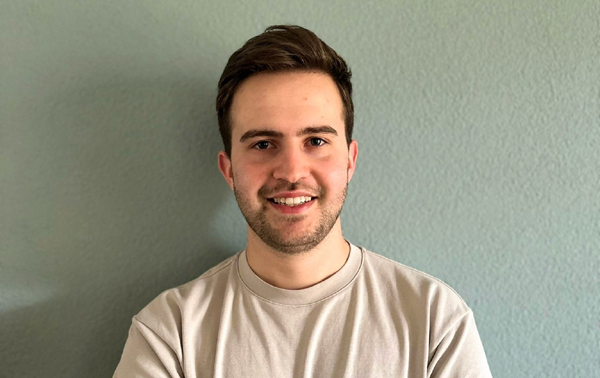
Robin Huijerjans joined VIRO as a graduate student in 2022. His assignment: work out a vehicle fuel tank for ammonia. As this job was completed smoothly (a standard LPG tank turned out to be sufficient already), his assignment was extended. Robin started researching the possibilities of ammonia as a fuel for trucks. "These often travel long distances. If you don't want to emit CO₂, the range of hydrogen and electricity is far too small: between 300 and 600 kilometres on average. The range of a comparable diesel truck is 1,600 kilometres. My research showed that the range of an internal combustion engine converted for ammonia is in between: around 1000 kilometres. So much better than electric and hydrogen-powered vehicles".
Stretching the horizon
With his graduation thesis, Robin won the ACE (Automotive Centre of Expertise) Student Award. That was all still in 2022. What is the status anno 2024? "Between then and now, including right now, several interns continued my research. Some focused more on combustion engines, others on fuel cells. At the bottom line, the conclusion from each research is that ammonia is incredibly interesting. Besides ammonia, the interns also investigate other options, for example methanol. There are lots of options for CO₂ neutral fuel. We have only recently started exploring other directions. It is too early to say anything about that at this stage. Right now, we are mainly looking at dual fuel options. With that, we expect to connect with the market sooner."
On the ball
That vehicle market is following the developments in Echt with increasing interest. Several well-attended days around the transition theme have been organised from VIRO, including in cooperation with the Limburg Agricultural and Horticultural Union (LLTB). "Farmers have a surplus of ammonia. Couldn't you capture and process that and then use it as fuel for vehicles? We are also exploring those kinds of directions,‘ Robin says: ’In addition, we are working with various research parties and startups on Chemelot's Brightlands campus. We can't deepen our ammonia research for vehicles that much more. It is now up to the manufacturers to develop engines first. After that, we can apply our knowledge again."